 Français
 English
GRJ · 1GR-FE
4.0 V6 · 228 hpKnown for reliability. Five-speed manual or six-speed automatic, depending on configuration. Suitable for a compatible approved E85 conversion.

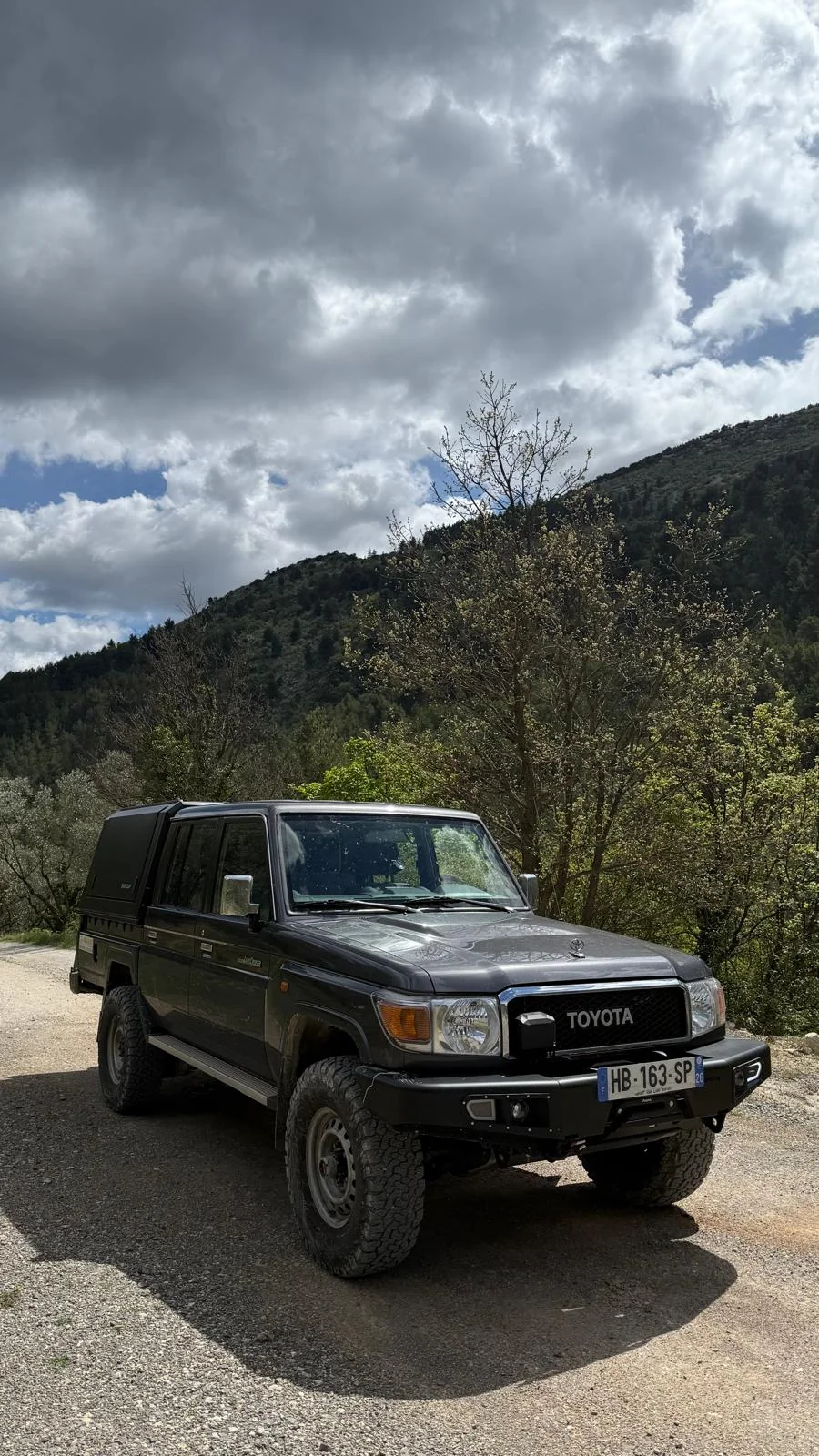
TOYOTA · 70 SERIES
One family, several body styles and four engines. OFF TO ROAD sources, imports and helps with approval for the configuration that suits your project.
ENGINE OPTIONS
Known for reliability. Five-speed manual or six-speed automatic, depending on configuration. Suitable for a compatible approved E85 conversion.
Designed for fuel economy and range. Well suited to long-distance vehicle builds.
Export only. Toyota's long-running naturally aspirated diesel, valued for simplicity and durability for over 20 years.
Special order. The 70 Series turbo diesel V8 delivers torque and a distinctive driving experience.
ON THE ROAD WITH OUR CUSTOMERS
Philippe's first-hand account, published as supplied. The configurations, consumption figures and opinions reflect his own vehicles and experience.
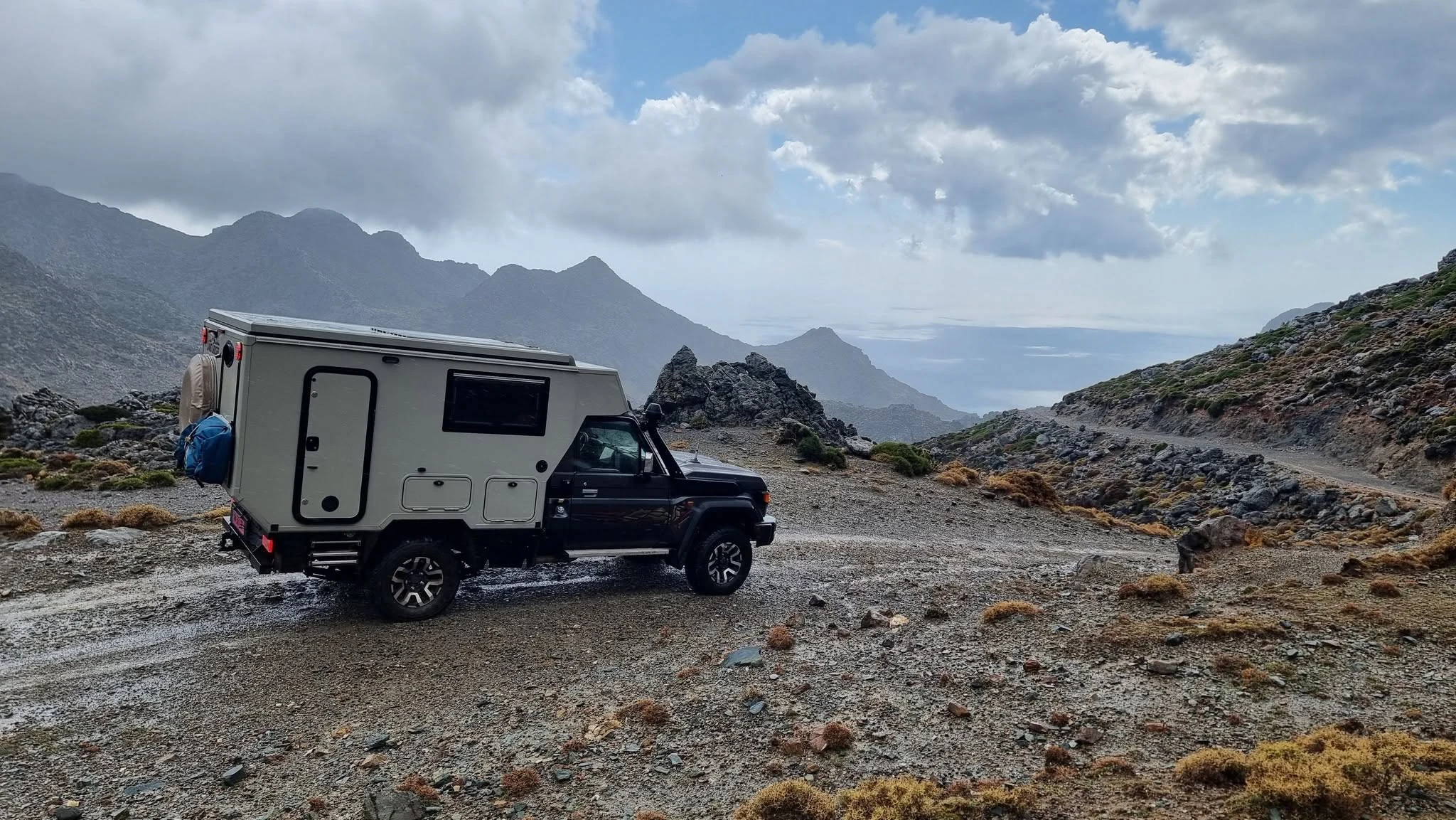
For almost eight years I owned an HZJ 79 with a homemade camper and an HDJ80 24-valve drivetrain. In April 2023 I also got a 2.8-litre automatic Hilux with a camper. I sold both in September 2024 and bought a 236 hp 4.0-litre automatic GRJ with a new camper, E85 conversion and suspension and brake work. I drove 6,000 km in Italy, 5,000 in Morocco and 6,000 in Mauritania. In February 2026 I sold it at 20,000 km and received my 2.8-litre automatic GDJ 79 without AdBlue. I'm running it in on Milos and Crete with another new camper.
I'll leave approval to specialists. Prices rose by €15,000 or more amid the war in Iran and the problems in the Strait of Hormuz. Fortunately I had ordered mine earlier.
Visually they are identical, except that the GRJ has a rear anti-roll bar.
I find the braking on both vehicles borderline dangerous. Apart from ABS, the brakes date back to the 130 hp naturally aspirated HZJ despite the additional 75 or 100 hp. My upgrades included drilled and grooved front discs, EBC Yellowstuff pads (€150), high-temperature fluid such as Motul RBF 600 and six braided hoses (€200). I also fitted a Terrain Tamer brake booster on the GDJ, giving 30% more assistance (€800). Braking is now adequate for a vehicle weighing 3.2 tonnes or more. Larger discs and high-performance calipers require 17-inch wheels and cost much more.
I would have preferred to keep 16-inch wheels, but tyre choice is limited and relatively expensive. There are many more options at lower prices in 17 inches. Newer vehicles are more powerful and have larger brakes, hence the bigger wheels.
I have no complaints about the Terrain Tamer 50 mm lift kit with parabolic springs rated for 400–700 kg and Proshock dampers.
The GRJ V6 makes 236 hp and 360 Nm. The GDJ 2.8 makes 204 hp and 500 Nm. The unloaded GRJ is great fun and an exhaust makes the V6 sound fantastic. It accelerates hard and responds quickly in technical terrain in low range. With a camper and 3.2 tonnes or more, it lacks torque and demands higher revs if you want to drive briskly.
The GDJ 2.8 four-cylinder sounds less pleasing, but has strong torque at all speeds. My Hilux with the same engine had 420 Nm. The GDJ feels much more effective and pleasant to drive despite the GRJ having 32 hp more on paper. It almost reminds me of my 4.2.
My GRJ used 18 L/100 km cruising and 20 on hilly roads. It went down to about 15 on Moroccan highways. In soft sand on the railway track at 42°C it used around 35, and on sandy trails 25–30. Even with 90 plus 160 L of fuel (190 kg), you start looking for a station after 800 km. The GDJ without AdBlue is better. At 5,000 km I measured 12.2 then 11.3 on Italian main roads heading to Brindisi. On Milos, with about half the driving on tracks and frequent climbs and descents, it was closer to 18. I have a heavy foot and the trip computer quickly drops by 2 when my wife drives.
In Crete, with 20% tracks, winding roads and plenty of elevation changes, I get 14–15 L/100 km. That's about 2 L more than a Hilux but much less than the GRJ. With two 90 L tanks (153 kg), I can easily cover 1,200 km.
Both engines are more complex than the 4.2. The V6 is known for reliability, and this simplified 2.8 has a good reputation after years of use in other models. This version has no AdBlue and can be remapped easily.
At Valloire I spoke at length with Philippe, who lives in South Africa and owns a VDJ79 and a GRJ79. He sees GRJ range as a real drawback. Among the diesels he prefers the GDJ as it is livelier, lighter and more economical while staying capable.
That's my personal experience with the 70 Series vehicles I've owned.
BODY STYLES
Single or Double Cab pickup, Troopy, Station Wagon or short-wheelbase model.
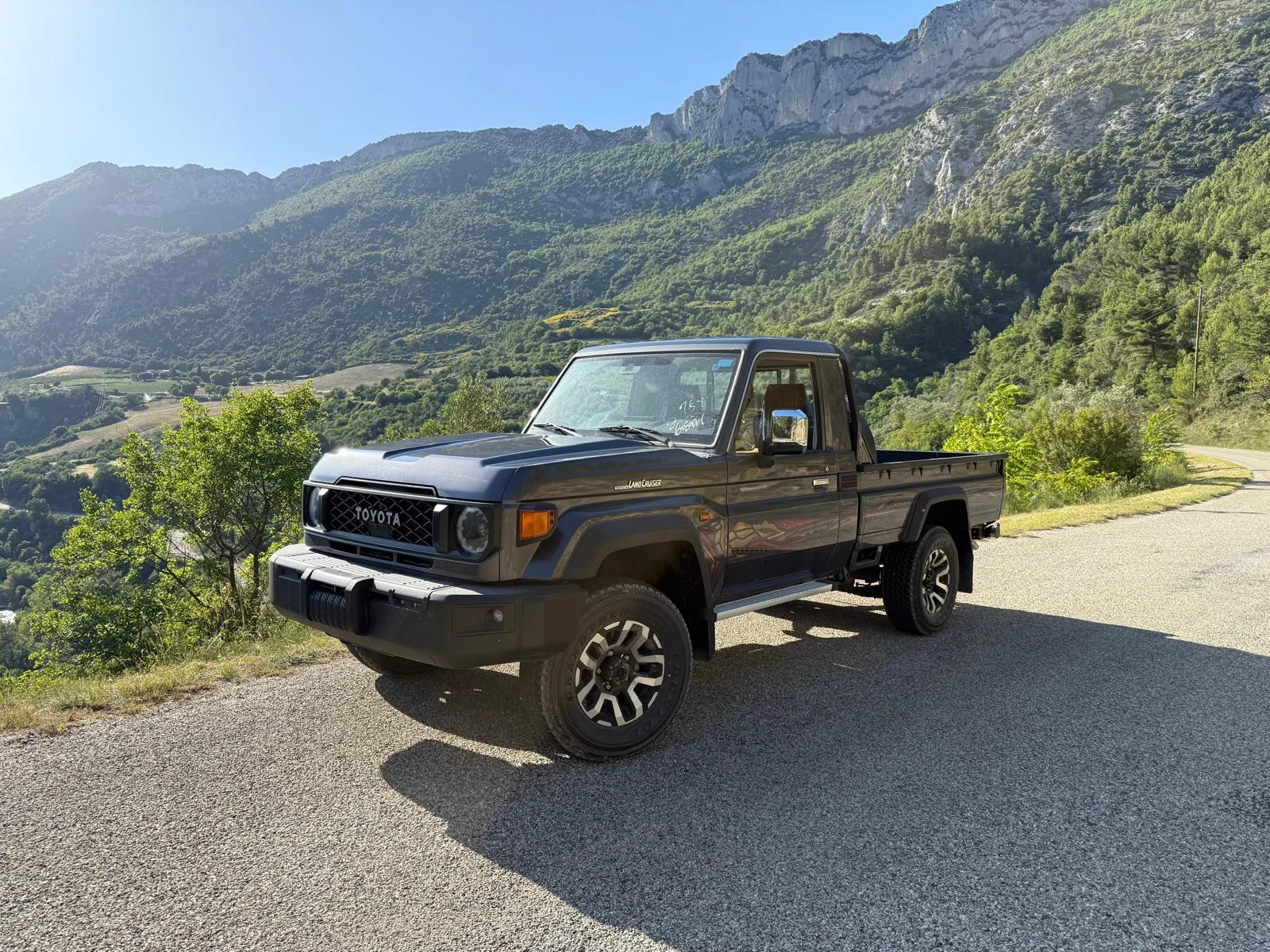
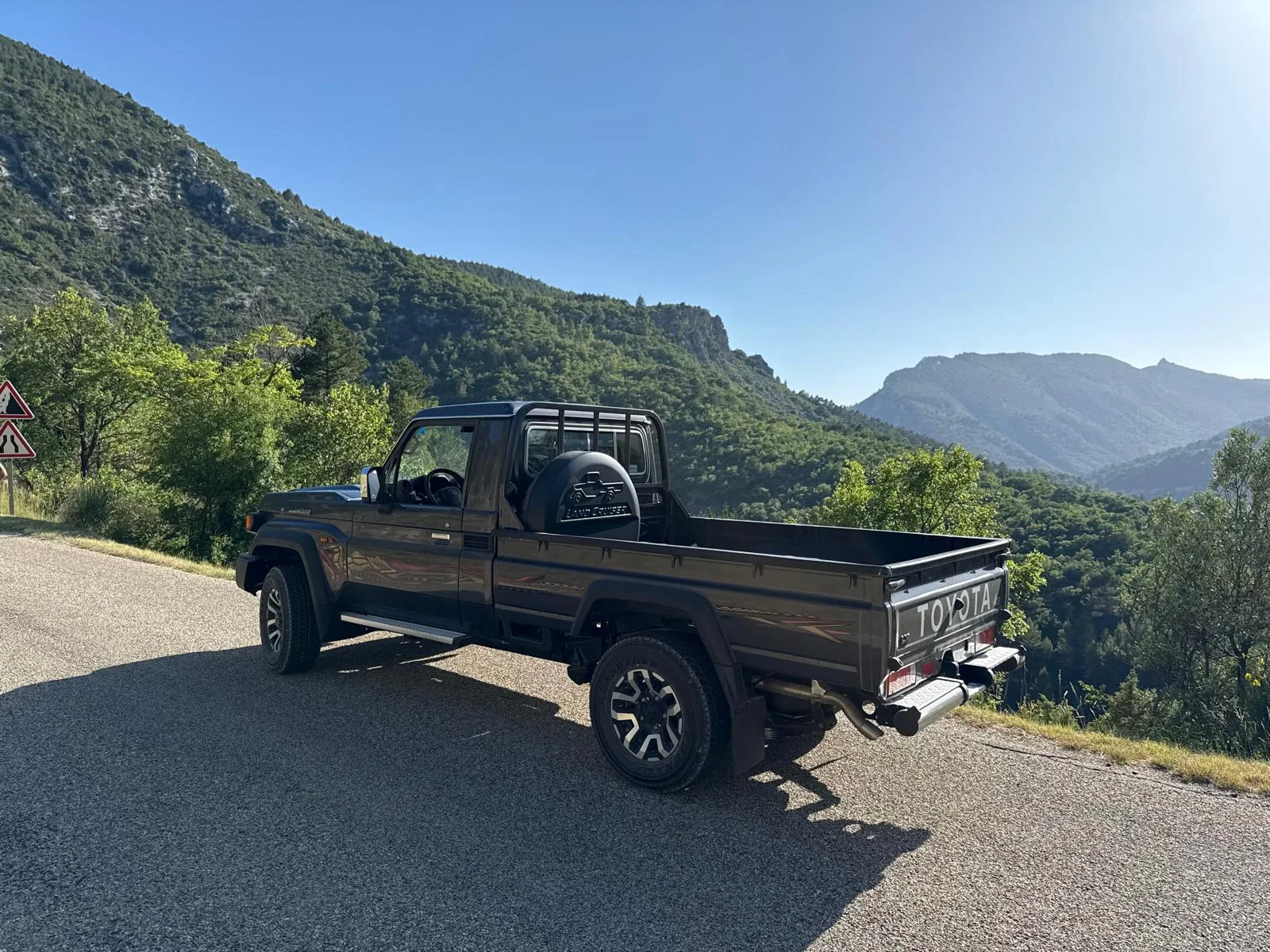
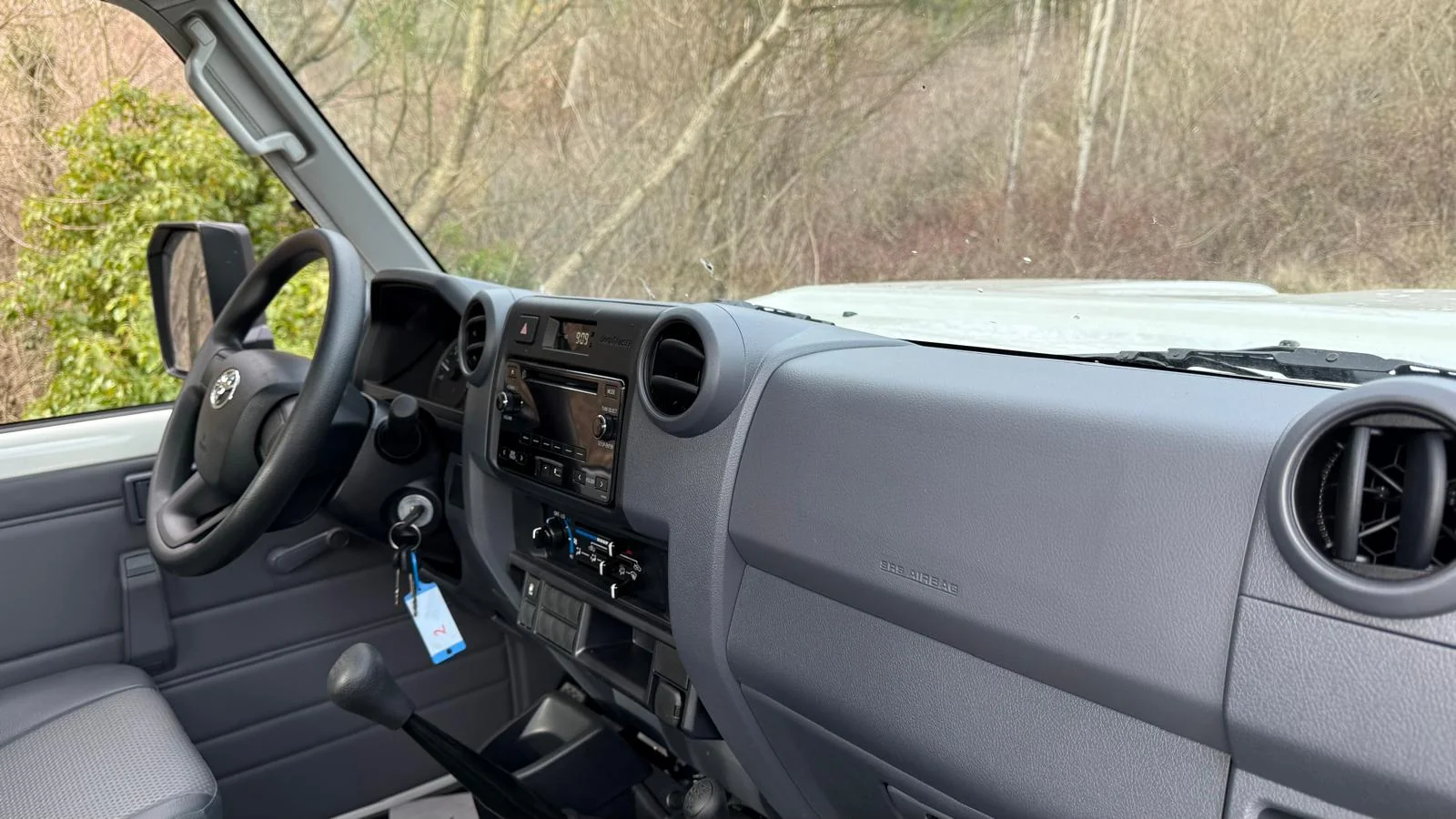
LAND CRUISER 79
The 79 Single Cab pickup. The largest pickup bed on the market. A vehicle built for work.
* Depends on configuration and vehicle approval. Exact Toyota bed dimensions vary by version.
LAND CRUISER 79
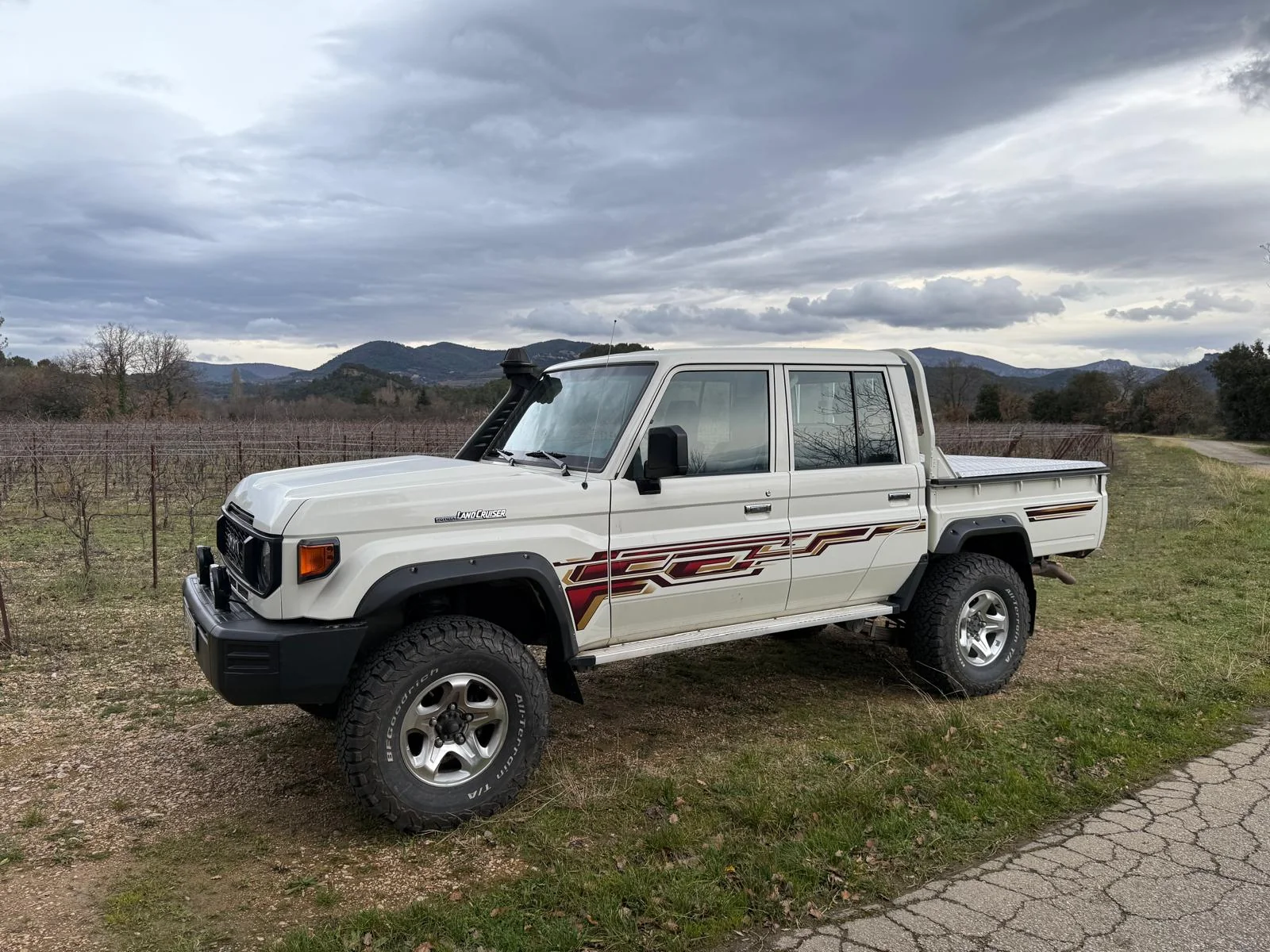
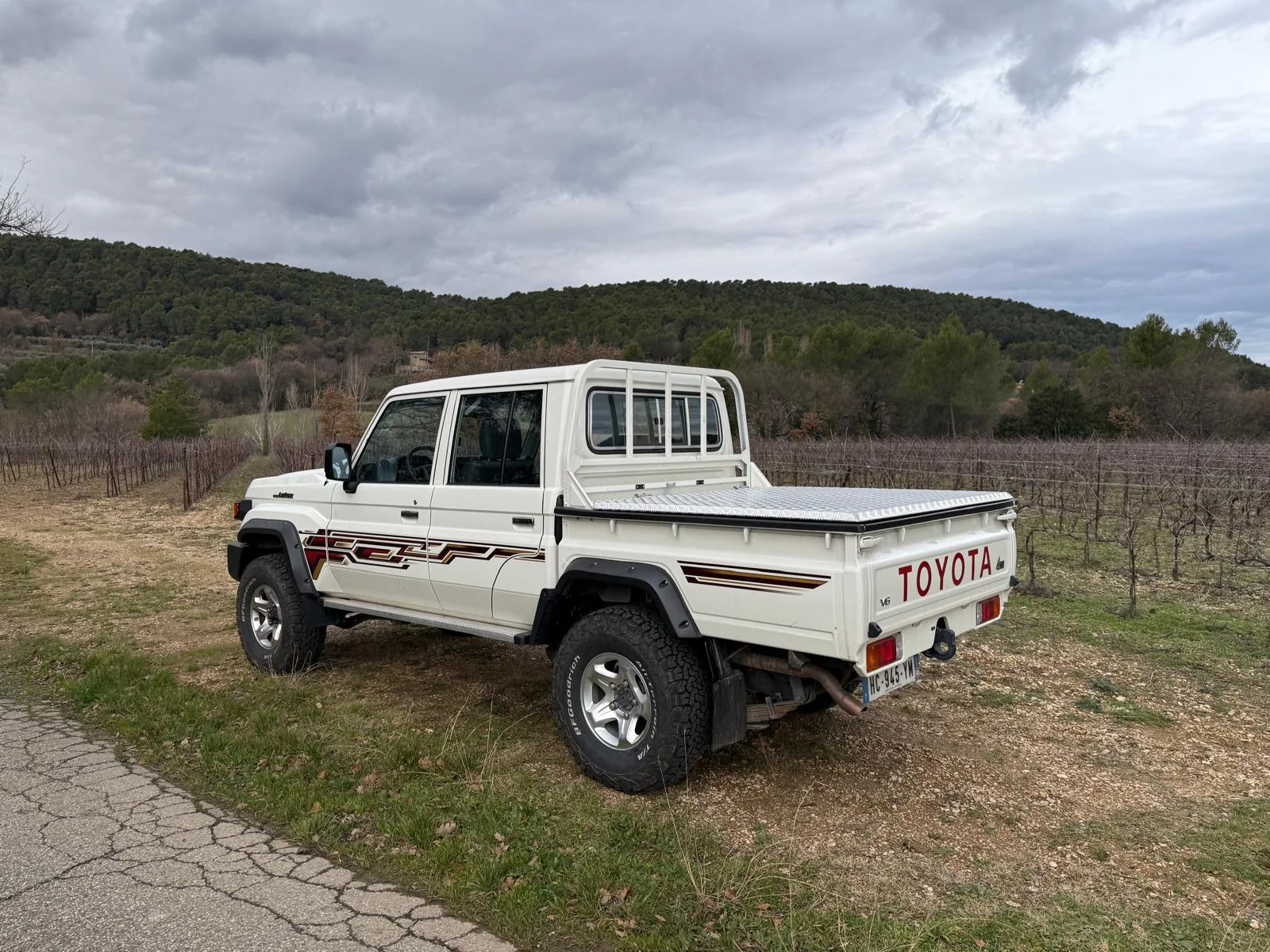
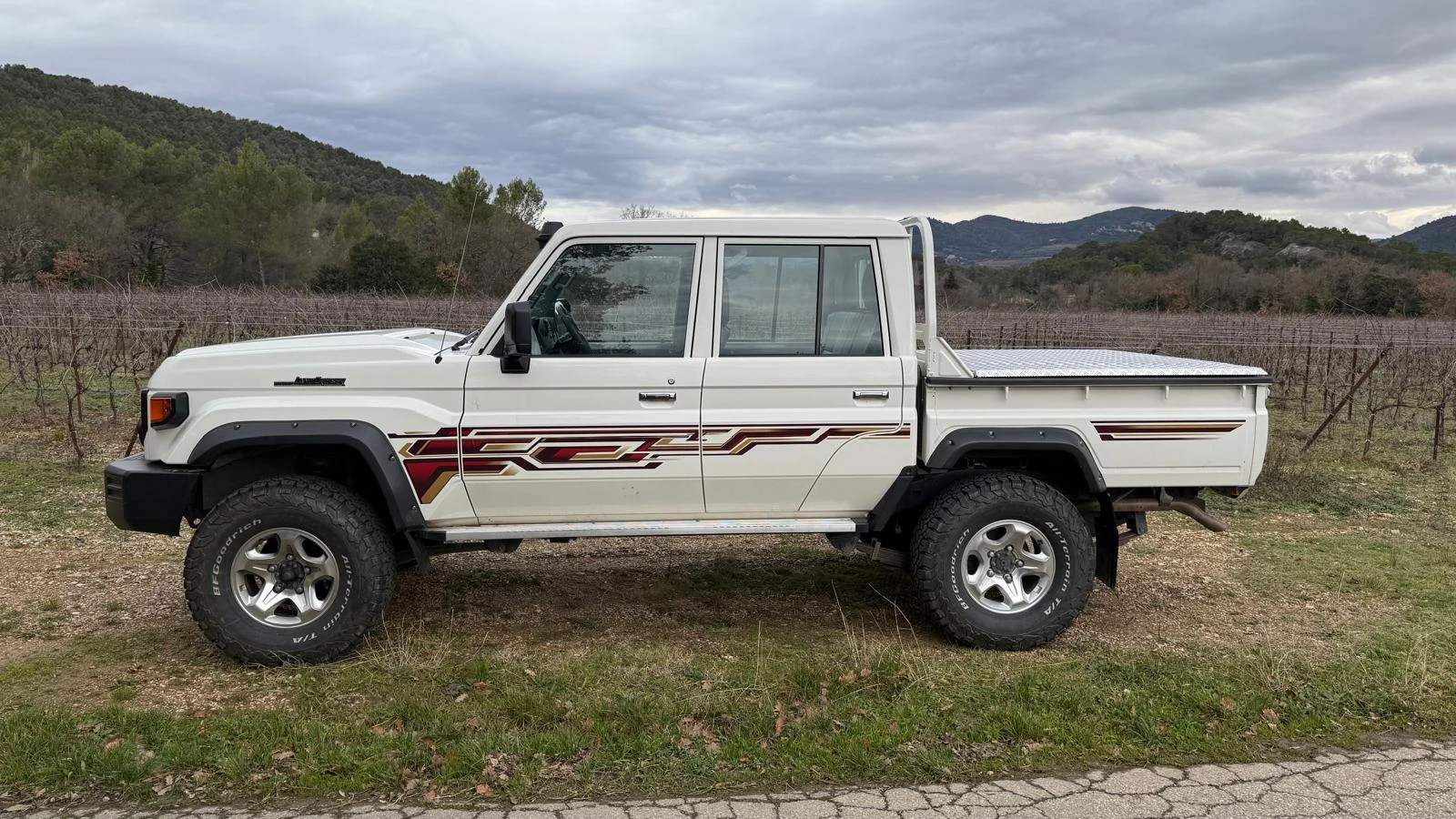
Four doors and extra cabin space.
* Depends on configuration and approval.
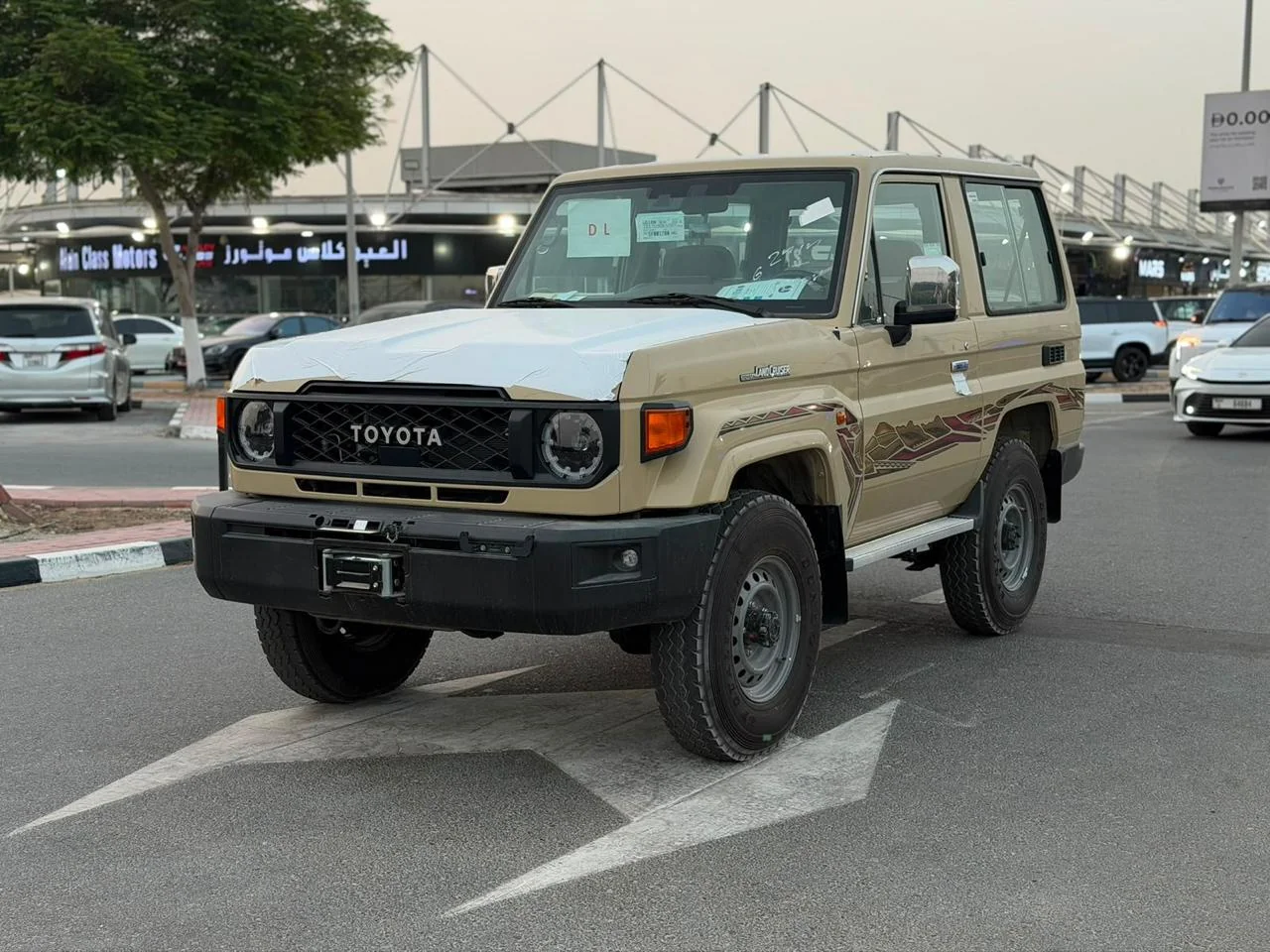
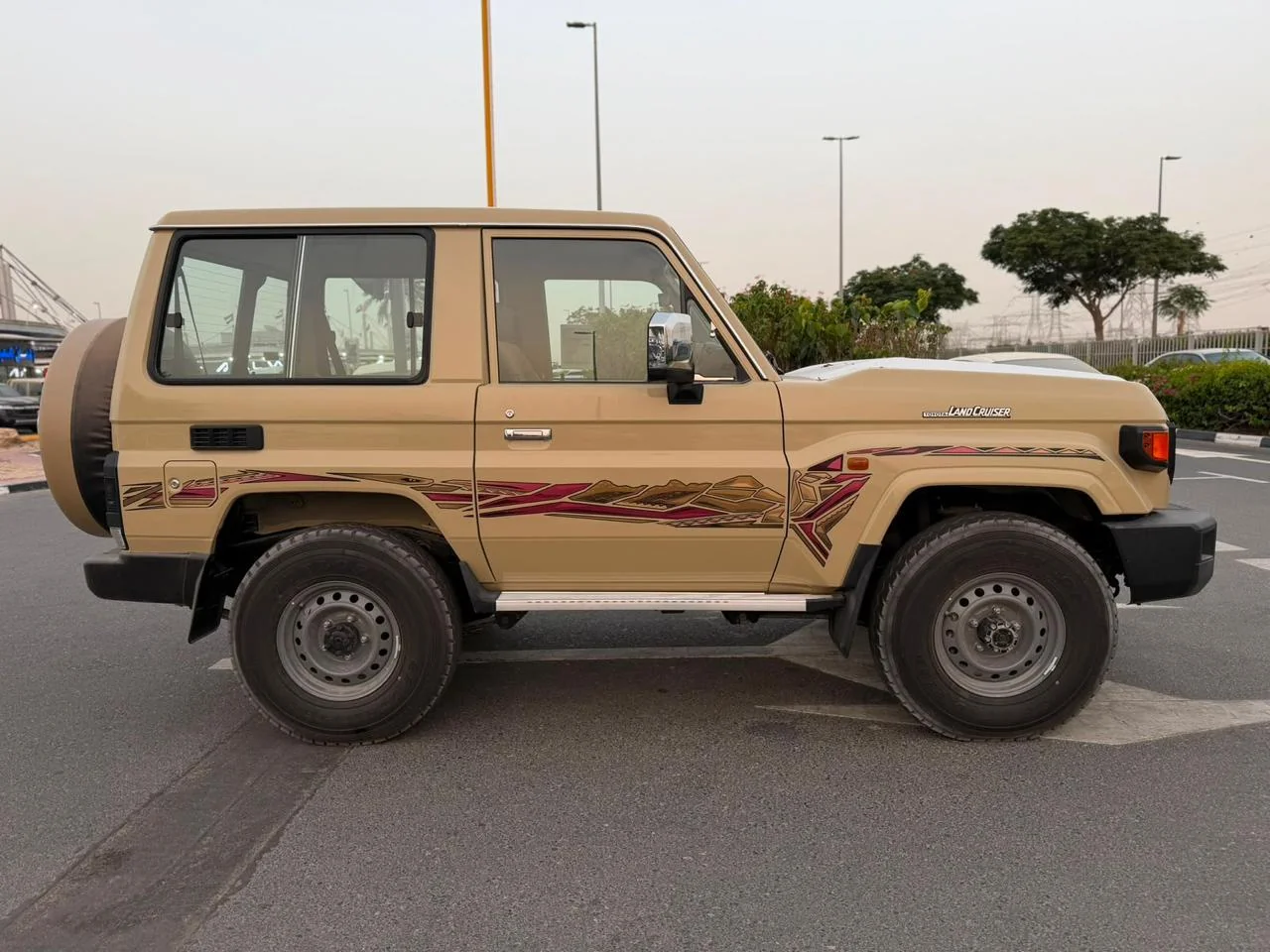
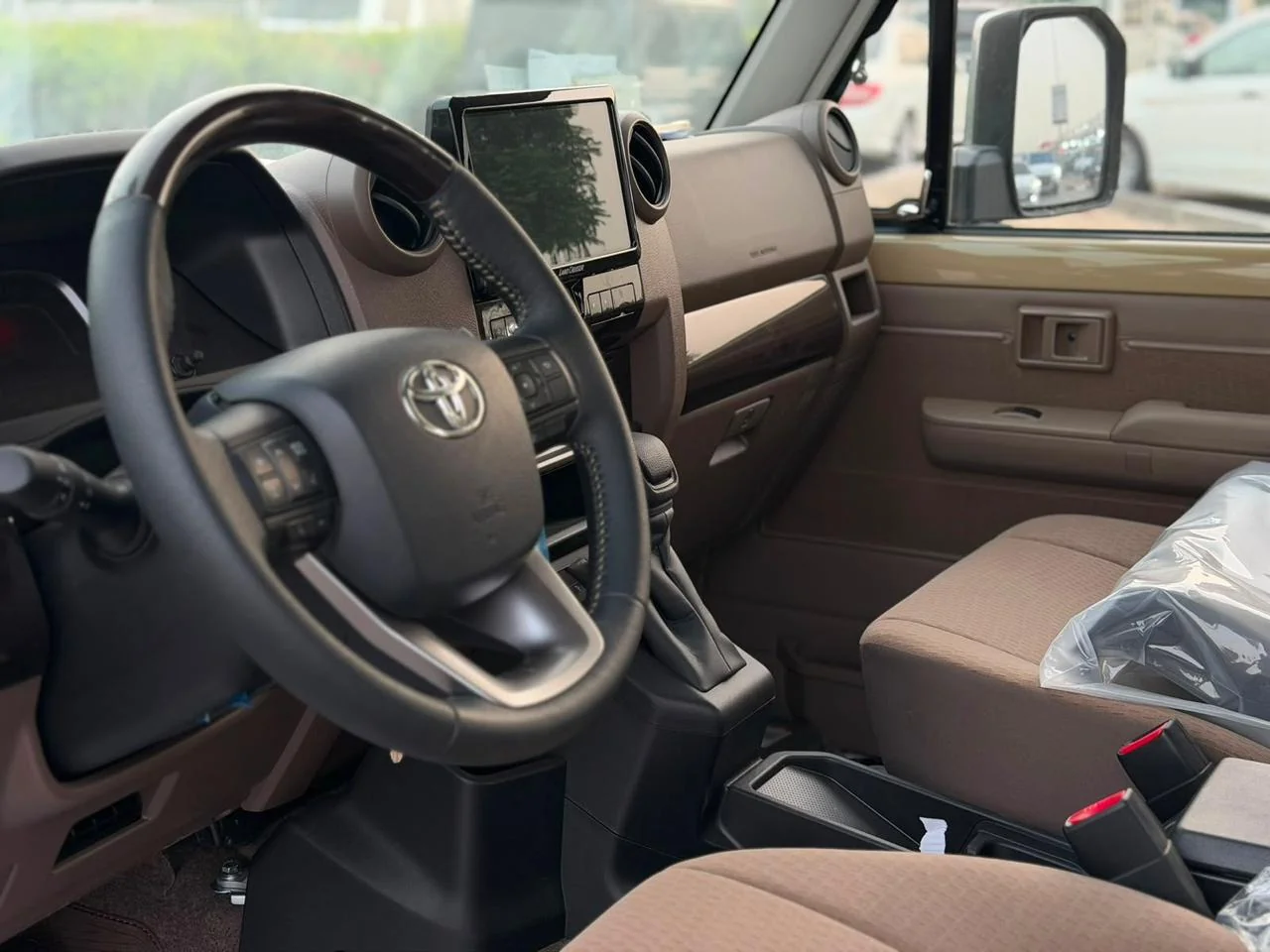
GRJ71 · LX TRIM
Commercial vehicle configuration. Environmental surcharge, VAT and vehicle-use taxes depend on approval and the buyer's circumstances. E85 conversion is possible with a compatible approved device. * Subject to approval and configuration.
LAND CRUISER 78
Troopy
* Depends on configuration and vehicle approval.
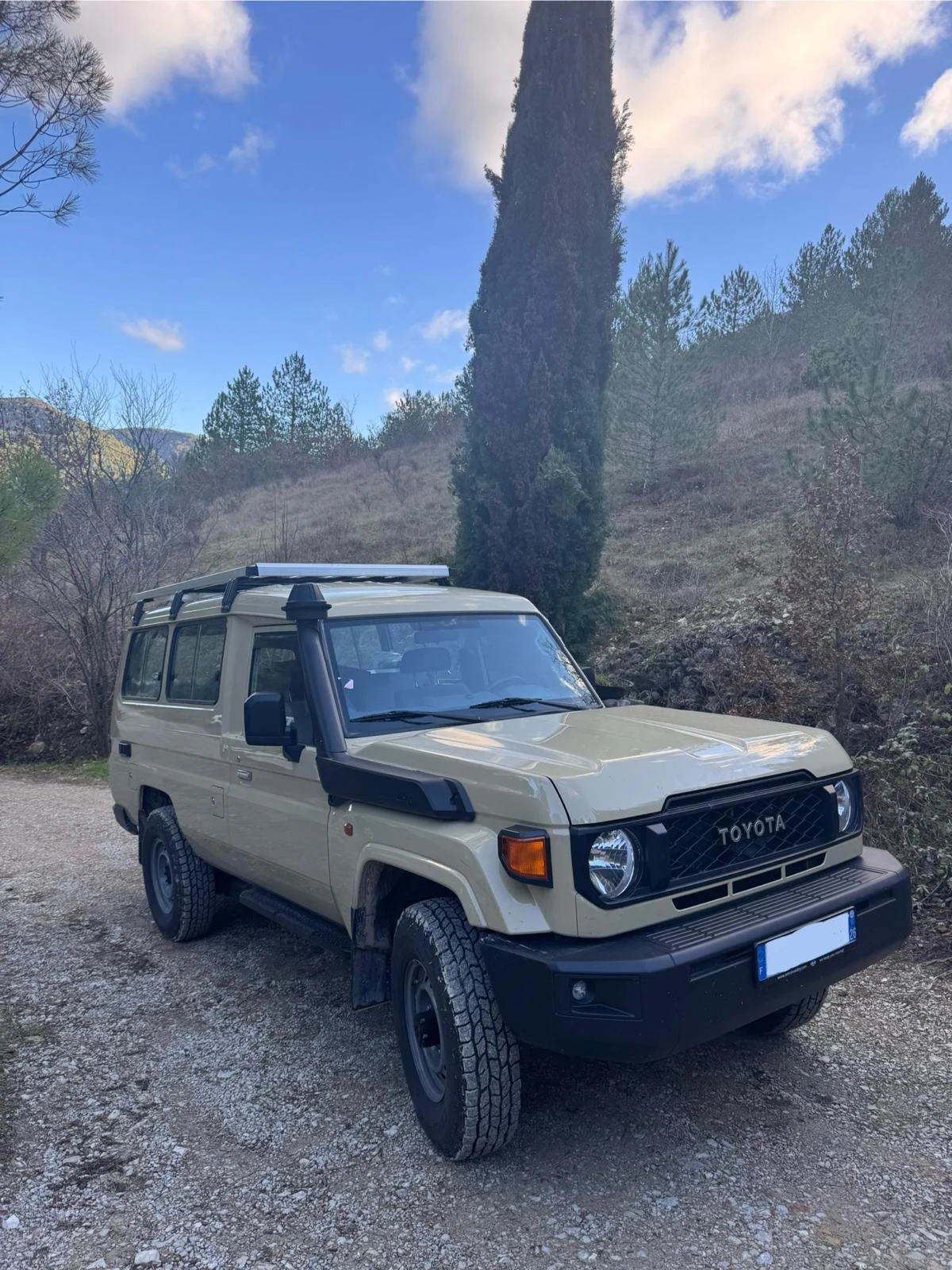
LAND CRUISER 76
* Depends on configuration and vehicle approval.
LAND CRUISER TO ORDER
79, 78, 76 or 71: tell us your preferred engine, body style and intended use.
Request a quote